
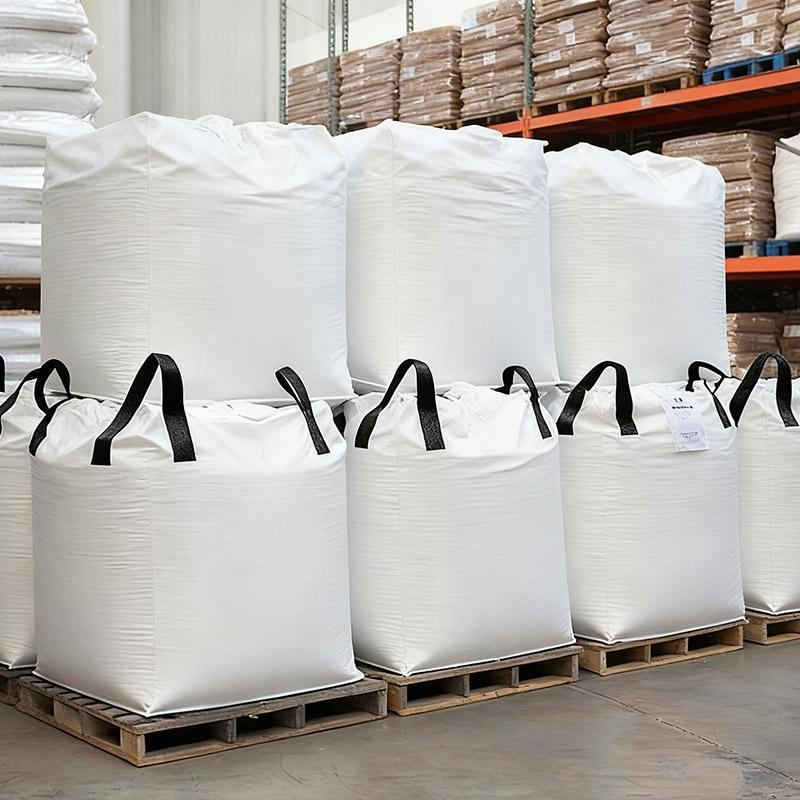
FIBC bags, also known as bulk bags, jumbo bags, or big bags, provide an efficient solution for storing, handling, and transporting dry bulk materials. Manufacturers mainly use woven polypropylene (PP) fabric to produce these industrial packaging bags. Their lightweight construction, strength, and flexibility make them suitable for many industries.
From agriculture and construction to chemical processing and manufacturing, businesses use FIBC bags to package a wide range of materials, including powders, granules, grains, and plastic resins.
Buyers can customize bag structures, dimensions, load capacities, and functional features according to their packaging requirements.
In this guide, we explain the main types of FIBC bags, their materials, applications, specifications, and key factors to consider when choosing a reliable bulk bag supplier.
1. What Are FIBC Bags?
FIBC stands for Flexible Intermediate Bulk Container. People also call these products bulk bags, jumbo bags, big bags, or ton bags.
Manufacturers typically use woven polypropylene (PP) fabric to make FIBC bags. This material offers good tensile strength, flexibility, and durability while keeping the overall bag weight relatively low.
A standard FIBC bag usually includes four main components:
-
- Bag Body: Holds the packaged materials and provides the main structural support.
-
- Lifting Loops: Allow forklifts or cranes to lift and move the bag.
-
- Filling Inlet: Provides an opening for loading bulk materials.
-
- Discharge Outlet: Allows operators to empty the bag when necessary.
Businesses can choose different combinations of these components to meet their material handling, storage, and transportation requirements.
2. Main Types of FIBC Bags
FIBC bags come in different structural designs. Three common types include U-Panel FIBC Bags, Circular FIBC Bags, and Baffle FIBC Bags.
Each design offers specific advantages for different packaging and storage applications.
2.1 U-Panel FIBC Bags
U-Panel FIBC Bags feature a U-shaped piece of woven fabric that forms the bottom and two opposite sides of the bag. Manufacturers add two separate side panels to complete the bag body.
This construction provides good structural strength and makes U-panel bags a popular choice for general industrial packaging.
Key Features:
-
- Strong and durable bag construction.
-
- High-quality PP woven fabric.
-
- Customizable dimensions and load capacities.
-
- Different lifting loop configurations.
-
- Various filling and discharge options.
Common Applications:
-
- Fertilizers.
-
- Plastic pellets and resins.
-
- Construction materials.
-
- Agricultural products.
-
- Industrial raw materials.
U-Panel FIBC Bags offer a practical solution for businesses that need reliable and versatile bulk packaging.
Explore our [U-Panel FIBC Bags] product range for more information.
2.2 Circular FIBC Bags
Circular FIBC Bags, also known as tubular FIBC bags, use tubular woven polypropylene fabric to form the main body.
This construction reduces the number of vertical side seams and provides an alternative design for general bulk packaging applications.
Key Features:
-
- Tubular woven fabric construction.
-
- Fewer vertical side seams.
-
- Customizable bag dimensions.
-
- Flexible filling and discharge configurations.
-
- Suitable for various dry bulk materials.
Common Applications:
-
- Grains and seeds.
-
- Agricultural products.
-
- Plastic raw materials.
-
- Industrial powders and granules.
-
- General bulk cargo.
Buyers can customize Circular FIBC Bags according to their required dimensions, load capacity, and handling conditions.
Explore our [Circular FIBC Bags] product range to learn more.
2.3 Baffle FIBC Bags
Baffle FIBC Bags, also known as Q Bags, feature additional fabric panels inside the four corners of the bag.
These internal baffles help the bag maintain a square or rectangular shape after filling. They also reduce outward bulging and improve stacking stability.
Compared with conventional bulk bags, Baffle FIBC Bags can help businesses use warehouse and shipping container space more efficiently.
Key Features:
-
- Internal corner baffle construction.
-
- Better shape retention after filling.
-
- Improved stacking stability.
-
- More efficient storage and transportation.
-
- Customizable filling and discharge designs.
Common Applications:
-
- Plastic granules.
-
- Chemical raw materials.
-
- Fertilizers.
-
- Agricultural products.
-
- Industrial powders.
Baffle FIBC Bags suit businesses that prioritize bag shape, stacking stability, and transportation efficiency.
Explore our [Baffle FIBC Bags] product range for more details.
3. Materials Used in FIBC Bag Production
Polypropylene (PP) is the primary material for most standard FIBC bags.
Manufacturers produce PP woven fabric by weaving polypropylene flat tapes together. This process creates a strong, lightweight, and flexible material for industrial packaging.
Depending on the packaged products and working environment, buyers can choose different fabric treatments and additional materials.
3.1 PP Woven Fabric
PP woven fabric forms the main body of most FIBC bags.
Its main advantages include:
-
- Good tensile strength.
-
- Lightweight construction.
-
- High flexibility.
-
- Good resistance to normal handling stress.
-
- Cost-effective industrial packaging performance.
Manufacturers can adjust fabric weight (GSM), weaving density, and other specifications according to the required load capacity and application.
3.2 Coated vs. Uncoated FIBC Bags
Buyers can choose between coated and uncoated PP woven fabric.
Coated FIBC Bags
Manufacturers apply an additional polypropylene coating to the fabric surface.
This coating helps:
-
- Improve moisture resistance.
-
- Reduce dust penetration through the fabric.
-
- Provide additional surface protection.
Uncoated FIBC Bags
Uncoated bags retain the original breathable structure of PP woven fabric.
Their advantages include:
-
- Better air permeability.
-
- Suitability for applications that require ventilation.
-
- Practical performance for general packaging.
-
- An economical option for many industrial uses.
Buyers should consider moisture sensitivity, particle size, and storage conditions when choosing between these two options.
Lorem ipsum dolor sit amet, consectetur adipiscing elit. Ut elit tellus, luctus nec ullamcorper mattis, pulvinar dapibus leo.
3.3 FIBC Bags with PE Liners
Some materials require additional protection against moisture or contamination. Buyers can add polyethylene (PE) liners inside FIBC bags to meet these requirements.
Common applications include:
-
- Fine powders.
- Chemical raw materials.
-
- Moisture-sensitive materials.
-
- Certain food and agricultural products.
Buyers should select the liner thickness, structure, and installation method according to the packaged material.
4. Main Applications of FIBC Bags
FIBC bags serve many industries because manufacturers can customize their structures, materials, and functional features.
Agriculture Industry
Agricultural businesses use bulk bags to package and transport:
-
- Rice, corn, and wheat.
-
- Seeds.
-
- Animal feed.
-
- Agricultural fertilizers.
Chemical Industry
Chemical manufacturers and distributors use FIBC bags for:
-
- Chemical powders.
-
- Industrial additives.
-
- Pigments.
-
- Plastic resins.
-
- Chemical granules.
For combustible dusts and flammable materials, buyers must evaluate electrostatic risks and select an appropriate anti-static FIBC design.
Construction Industry
Construction companies use bulk bags to handle:
-
- Sand and gravel.
-
- Cement.
-
- Dry-mix mortar.
-
- Mineral powders.
-
- Construction additives.
Food Processing Industry
Manufacturers can produce FIBC bags that meet specific food-contact requirements for suitable products, such as:
-
- Sugar.
-
- Edible salt.
-
- Flour.
-
- Starch.
-
- Food ingredients.
Buyers should confirm material suitability, production hygiene, and relevant food-contact compliance before ordering.
Plastics and Manufacturing Industries
FIBC bags also provide practical packaging for:
-
- PP plastic pellets.
-
- PE plastic pellets.
-
- Plastic resins.
-
- Rubber raw materials.
-
- Industrial powders.
5. Filling and Discharge Options
The filling inlet and discharge outlet affect how efficiently workers handle bulk materials.
Buyers can select different configurations according to their filling equipment and unloading requirements.
Top Filling Options
-
- Open Top: Provides a fully open bag mouth for direct loading.
-
- Duffle Top: Features an extended fabric skirt that workers can close after filling.
-
- Filling Spout: Uses a cylindrical inlet that connects to filling equipment.
Bottom Discharge Options
-
- Flat Bottom: Features a closed base for applications that use alternative unloading methods.
-
- Discharge Spout: Provides a controlled outlet for releasing bulk materials.
-
- Conical Bottom: Uses a cone-shaped base to help suitable materials flow toward the discharge opening.
The right configuration depends on the material’s flow characteristics, filling equipment, and unloading process.
6. FIBC Bag Specifications and Load Capacity
Before purchasing FIBC bags, buyers should confirm the required dimensions, filling weight, material characteristics, and handling conditions.
The following table shows common specifications and customization options.
| Parameter | Available Options |
|---|---|
| Material | Polypropylene (PP) |
| Bag Type | U-Panel / Circular / Baffle |
| Safe Working Load (SWL) | Customized |
| Safety Factor | Common options: 5:1 and 6:1 |
| Width, Length and Height | Customized |
| Fabric Weight | Customized (GSM) |
| Top Design | Open Top / Duffle Top / Filling Spout |
| Bottom Design | Flat Bottom / Discharge Spout / Conical Bottom |
| Lifting Loops | 2 Loops / 4 Loops / Customized |
| Inner Liner | Optional PE Liner |
| Fabric Treatment | Coated / Uncoated |
| Printing | Customized Logo and Information |
Final specifications should match the bag design, testing results, applicable standards, and customer requirements.
What Is SWL?
SWL stands for Safe Working Load. It refers to the maximum rated weight that an FIBC bag can carry under specified conditions.
For example, a bag with an SWL of 1,000 kg has a rated working capacity of 1,000 kg.
Buyers should select the appropriate SWL according to the packaged material, actual filling weight, and handling requirements.
What Is the Safety Factor?
The safety factor describes the relationship between the tested breaking load and the rated Safe Working Load.
Common FIBC safety factors include:
-
- 5:1: Commonly used for single-trip bag designs.
-
- 6:1: Commonly used for multi-trip bag designs that meet relevant requirements.
Always check the applicable standards, test results, and manufacturer instructions before planning to reuse an FIBC bag.
7. How to Choose the Right FIBC Bag
Choosing the right bulk bag requires more than selecting its dimensions. Buyers should evaluate the following factors before placing an order.
1. Material Characteristics
Identify the packaged material, including its particle size, bulk density, moisture sensitivity, and flow properties.
2. Required Load Capacity
Determine the net filling weight and select an appropriate SWL.
3. Bag Construction
Choose U-panel, circular, or baffle designs according to structural requirements, bag shape, and storage conditions.
4. Filling and Discharge Methods
Confirm whether you need an open top, duffle top, filling spout, flat bottom, discharge spout, or conical bottom.
5. Storage and Transportation
Consider warehouse stacking, container loading, and transportation conditions.
6. Special Requirements
Check whether your products need PE liners, UV protection, anti-static features, or food-contact compliance.
7. Handling Equipment
Choose lifting loops that match your forklifts, cranes, and other lifting equipment.
Providing these details helps suppliers recommend suitable bag designs and specifications.
8. Why Choose Customized FIBC Bags?
Different industries have different packaging requirements. A standard bulk bag may not meet every application.
Manufacturers can customize FIBC bags according to your business needs, including:
-
- Bag structure and dimensions.
-
- Fabric weight and weaving specifications.
-
- Safe Working Load.
-
- Filling and discharge designs.
-
- Lifting loop configurations.
-
- Coated or uncoated fabric.
-
- Optional PE inner liners.
-
- Custom printing and colors.
-
- Special functional requirements.
Working with an experienced FIBC supplier helps buyers select suitable packaging specifications and coordinate production according to their needs.
9. Frequently Asked Questions About FIBC Bags
Q1: What does FIBC stand for?
FIBC stands for Flexible Intermediate Bulk Container. Businesses use these flexible packaging products to store and transport dry bulk materials.
Q2: What is the difference between FIBC bags and jumbo bags?
Both terms generally describe the same type of flexible bulk packaging product. Different markets simply prefer different names.
Q3: What are the main types of FIBC bags?
The three common designs include U-panel bags, circular bags, and baffle bags. Manufacturers also offer other specialized structures.
Q4: What materials do manufacturers use to make FIBC bags?
Most standard FIBC bags use woven polypropylene (PP) fabric. Manufacturers can also add coatings and PE liners according to specific requirements.
Q5: What is the standard load capacity of an FIBC bag?
Common purchasing requirements include 500 kg, 1,000 kg, 1,250 kg, and 1,500 kg. Actual capacity depends on the bag design and test results.
Q6: Can manufacturers customize FIBC bags?
Yes. Buyers can customize dimensions, fabric weight, load capacity, lifting loops, filling and discharge options, printing, and inner liners.
Q7: Can FIBC bags carry food products?
Yes. Manufacturers can produce FIBC bags for suitable food-contact applications. Buyers should confirm the required materials, hygiene conditions, and compliance documents.
Q8: How can I choose a reliable FIBC supplier?
Evaluate the supplier’s product range, manufacturing capabilities, quality control, customization services, testing documentation, and export experience.
10. Find the Right FIBC Bags for Your Business
Choosing the right FIBC bags can help your business improve bulk material handling, storage, and transportation efficiency.
Whether you need U-Panel FIBC Bags, Circular FIBC Bags, or Baffle FIBC Bags, our team can help you identify suitable designs and specifications.
We work with professional FIBC manufacturing facilities in China to provide customized bulk packaging solutions for international importers, wholesalers, distributors, and industrial buyers.
Share your required bag dimensions, load capacity, material type, and estimated order quantity with us. Our team will help you find a suitable packaging solution.
Contact us today to request a quotation for customized FIBC bulk bags!
Hi, this is a comment.
To get started with moderating, editing, and deleting comments, please visit the Comments screen in the dashboard.
Commenter avatars come from Gravatar.